Table of Contents
ToggleExternal Lighting Design: 7 Essential Steps for Safer, Compliant NSW Projects
External lighting design is a systematic engineering discipline that balances safety, compliance, energy efficiency and environmental responsibility. Whether you are developing a commercial precinct, upgrading a public space or illuminating a residential complex, professional external lighting design ensures your project meets regulatory standards, protects communities and delivers long-term value.
In New South Wales, external lighting projects must navigate Australian Standards, National Construction Code requirements and local council planning controls. A poorly designed lighting system can result in glare complaints, light pollution, failed approvals and costly remediation. Conversely, a thoughtfully designed scheme enhances safety, reduces energy consumption and demonstrates environmental stewardship.
Step 1: Understand the Project Brief and Regulatory Context
Every successful external lighting design begins with a comprehensive project brief. This includes understanding the site’s purpose, constraints and regulatory obligations. Key elements include site function (car park, pedestrian pathway, commercial façade or sports field), existing conditions and client expectations.
In NSW, external lighting may be subject to development consent conditions, local council planning controls, Australian Standards (AS/NZS 1158 for roads and public spaces, and AS/NZS 4282 for controlling obtrusive effects) and National Construction Code energy-efficiency provisions for Class 2–9 buildings [1] [2]. A professional consultant will identify which standards apply to your project and ensure design alignment from the outset.
Step 2: Conduct a Site Survey and Photometric Analysis
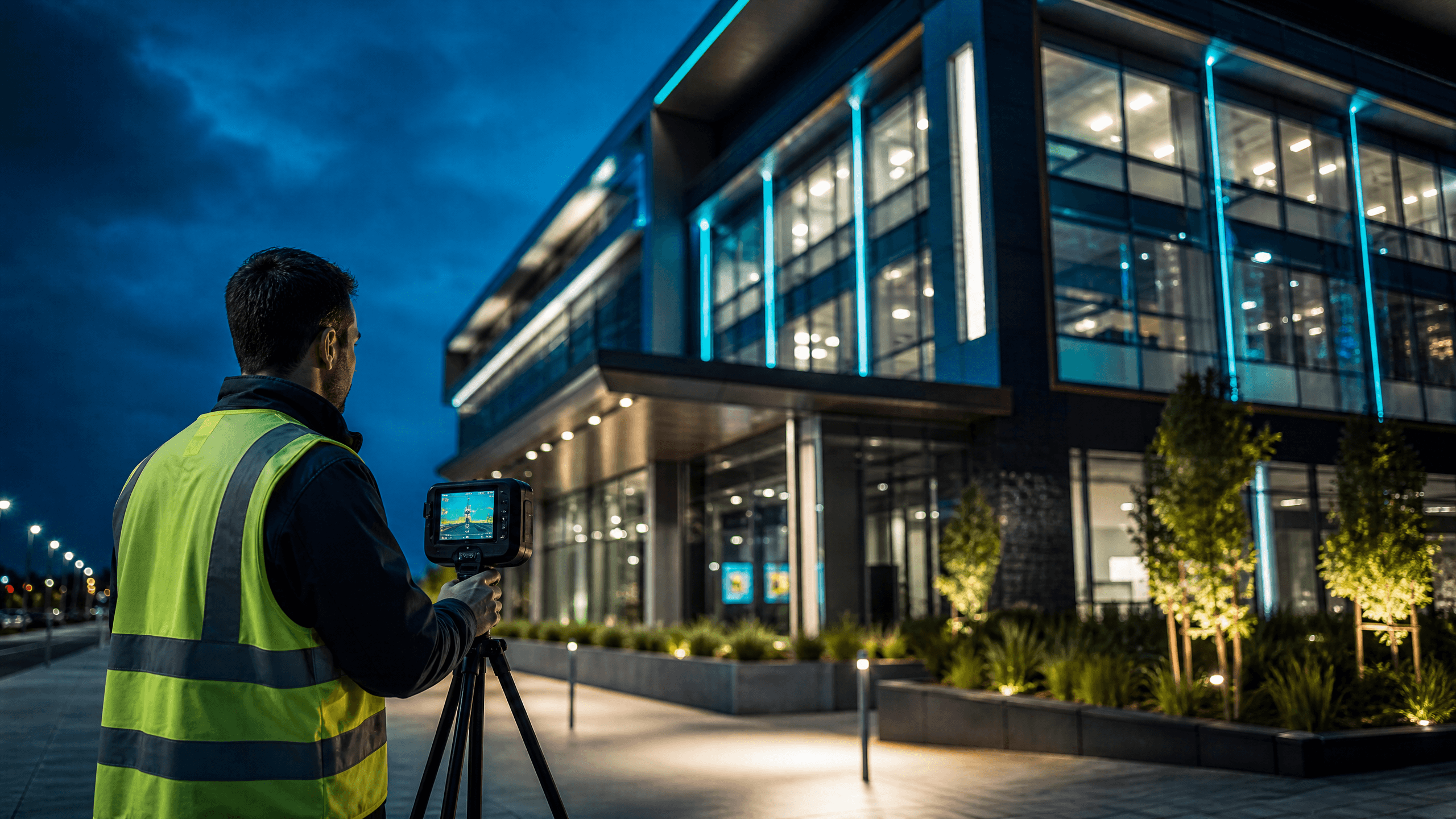
A detailed site survey establishes the foundation for effective design. Using calibrated light meters, a consultant measures existing illumination at key locations, assesses site geometry and reflectance, identifies sensitive receptors (nearby residences, wildlife habitats) and reviews electrical infrastructure. This data informs photometric modelling and ensures the design reflects real-world conditions.
Step 3: Select Appropriate Luminaires and Control Systems
LED luminaires are now the industry standard for external lighting, offering superior energy efficiency, long lifespan and compatibility with smart controls. Colour temperature selection is critical: warmer light (2700K–3000K, amber) is preferred for residential and sensitive environmental areas, while cooler light (4000K–5000K, white) may suit high-security areas. The Australian Government recommends amber or red-coloured lighting to reduce impacts on nocturnal wildlife [3].
Full cut-off luminaires (directing light downward, not upward) are essential for controlling glare and light spill. Modern control systems use motion sensors, daylight sensors and time-based scheduling to manage timing and intensity, significantly reducing energy consumption and light pollution.
Step 4: Perform Photometric Modelling
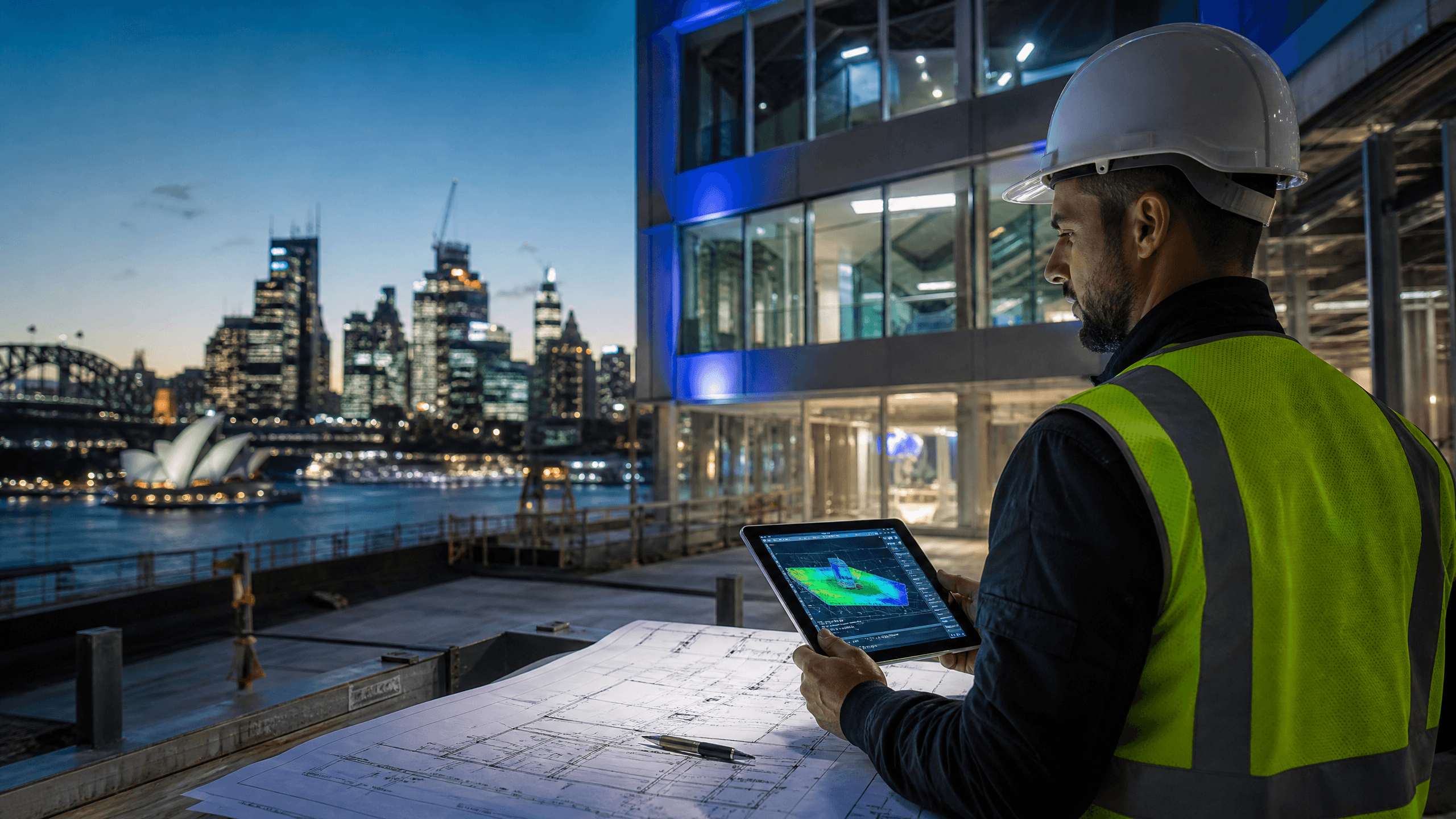
Photometric modelling uses specialised software to create a 3D model of the site and calculate illumination levels, uniformity, glare and light spill. This computational analysis generates illumination maps, glare analysis and a detailed luminaire schedule. If the initial model shows non-compliance, the designer adjusts luminaire types, positions or control strategies and re-runs the analysis. This iterative process ensures the final design meets all performance targets before construction.
Step 5: Ensure Compliance with Standards and Council Requirements
External lighting in NSW must comply with multiple overlapping standards. AS/NZS 1158 specifies lighting requirements for roads and public spaces, defining minimum illumination levels, uniformity ratios and glare limits . AS/NZS 4282:2023 addresses control of obtrusive effects of outdoor lighting, including light spill, sky glow and impacts on wildlife [2]. Compliance with AS/NZS 4282 is often a condition of development consent in NSW and is essential for environmentally responsible design.
The National Construction Code Part J7 specifies energy-efficiency provisions for Class 2–9 buildings [1]. Local councils incorporate these standards into development control plans and may impose additional conditions. A professional designer will review relevant council controls and ensure alignment.
Step 6: Prepare Comprehensive Design Documentation
Once the design is finalised and compliance verified, the consultant prepares detailed documentation for approval and installation. This includes lighting design drawings showing luminaire positions and mounting heights; a detailed luminaire and electrical schedule; photometric calculations and compliance reports; a design brief and justification; electrical design specifications; and an operation and maintenance manual. Comprehensive documentation reduces installation errors, supports future maintenance and provides a record of design decisions.
Step 7: Commission, Test and Verify
On-site commissioning is essential for ensuring the system performs safely and as designed. Activities include pre-commissioning inspection, electrical testing, photometric verification (measuring illumination levels and comparing to the model), control system testing and glare and light-spill assessment. The consultant prepares a commissioning report documenting all tests, measurements and final performance, verifying compliance with the design specification.
Common Mistakes to Avoid
Over-lighting wastes energy and causes light pollution. Neglecting controls means the system operates at full intensity 24/7. Poor luminaire selection based on price alone often results in glare and non-compliance. Inadequate site surveys lead to designs that do not fit the site. Ignoring standards and council requirements often results in approval delays or rejection. Poor coordination with other disciplines creates conflicts and cost overruns. Inadequate documentation complicates maintenance. Skipping commissioning often leads to operational problems.
When to Engage a Professional
You should engage a professional external lighting designer if your project involves regulatory compliance, complex site conditions, high-value projects, significant electrical infrastructure or performance guarantees. Professional lighting designers bring expertise in standards, site analysis, photometric modelling and commissioning.
For external lighting projects in NSW, Vec Group’s Lighting Engineering service brings deep expertise in Australian Standards and NSW council requirements. Our team has experience hiring professional lighting design consultants and ensuring compliance with AS/NZS 4282 obtrusive lighting requirements. We have delivered completed lighting projects across NSW and are ready to support your project.
Conclusion
External lighting design is a multi-step process that balances safety, compliance, energy efficiency and environmental responsibility. From understanding the project brief through commissioning and verification, each step builds on the previous one to deliver a lighting system that performs as intended and meets regulatory requirements.
If you are planning an external lighting project in NSW, contact Vec Group today for expert guidance and professional lighting design solutions.