Table of Contents
ToggleWhy False Alarms Are Common in Boarding Houses
Designing Practical Fire Detection Systems
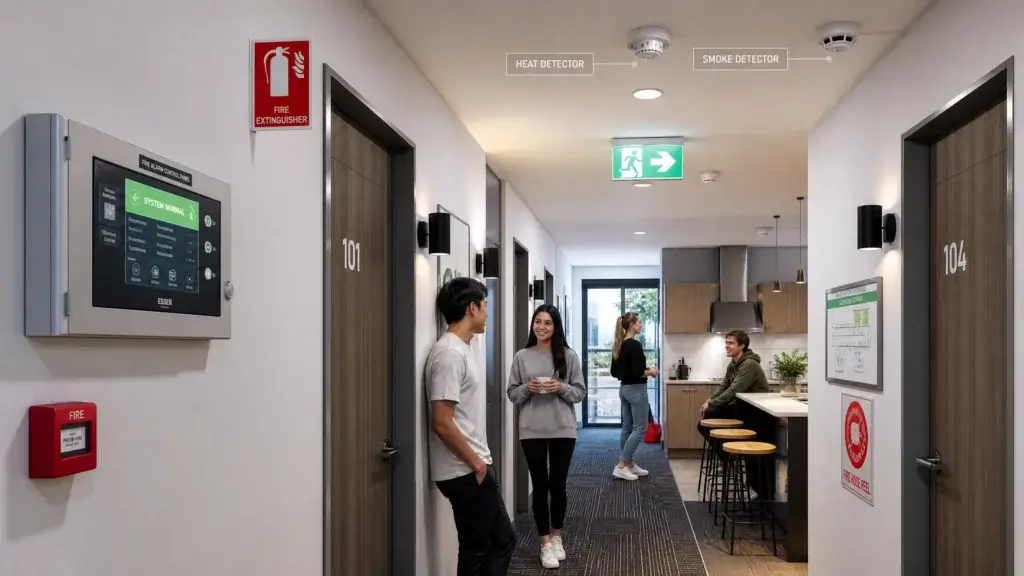
Strategy 1: Intelligent Detector Selection
- Smoke Detectors: Ideal for corridors; prone to cooking false alarms
- Heat Detectors: Virtually immune to cooking smoke; ideal for kitchens (activate at 57°C, 68°C, or 79°C)
- Multi-Sensor Detectors: Combine smoke and heat; excellent for kitchenettes
Strategy 2: Precise Detector Placement
Correct: Detectors centrally positioned on ceilings, away from cooking appliances, bathrooms, and vents
Incorrect: Detectors above cooking appliances, too close to bathrooms, or in corners
Strategy 3: Ventilation System Optimisation
Strategy 4: Understanding Occupant Behaviour
Alarm Acknowledgement Facilities (AAF): A Practical Solution
For the full technical detail, read our guide to the alarm acknowledgement facility (AAF).
Alarm Acknowledgement Facilities (AAF) provide a short investigation period before a building-wide evacuation is initiated, allowing occupants within the affected Sole Occupancy Unit (SOU) time to clear localised smoke from minor incidents such as cooking.
How AAF Works
- Smoke from burnt food or a minor nuisance event activates a detector within an SOU.
- The local alarm sounds within the affected SOU, alerting the occupants.
- A short acknowledgement period (typically up to 120 seconds) is provided before common area alarms and building-wide evacuation signals are activated.
- If smoke clears and the alarm is acknowledged, unnecessary evacuation is avoided.
- If the alarm is not acknowledged, or smoke conditions worsen, the system automatically proceeds to full evacuation in accordance with the fire strategy.
NCC & AS 1670.1 Requirements
AAF may be permitted for certain Class 3 buildings where:
- The acknowledgement period does not exceed 120 seconds.
- The system automatically proceeds to the next alarm stage if not acknowledged.
- The fire engineering strategy supports the use of AAF.
- Appropriate operating procedures are documented.
Advantages
- Reduces unnecessary building-wide evacuations caused by cooking and nuisance alarms.
- Provides residents an opportunity to clear localised smoke before evacuation signals are initiated.
- Minimises disruption, particularly during night-time hours.
- Reduces unwanted Fire Brigade attendance and associated costs.
- Maintains occupant confidence in the fire safety system.
- Supports long-term operational effectiveness of the fire alarm system.
Frequently Asked Questions
Q: Are smoke detectors required in every bedroom?
A: Requirements depend on building design and classification. Consult a building certifier.
Q: Can we disable detectors to reduce false alarms?
A: No. Disabling required detection is illegal. Implement proper design solutions instead.
Q: How often should systems be tested?
A: Fire alarm systems are serviced under AS 1851, with monthly, six-monthly and annual routines carried out by competent fire services contractors.
Q: What fire alarm system does a boarding house need?
A: Typically a smoke detection and alarm system to AS 1670.1 covering sole-occupancy units and common areas, with a building occupant warning system and, depending on size, monitoring to the fire brigade. The exact requirement comes from the NCC, the fire safety strategy and your certifier. See our guide to boarding house fire alarm systems.
Get Expert Fire Detection Design
- Contact VEC Group:
- Phone: 0406 039 661
- Email: info@vecgroup.com.au