Table of Contents
ToggleGlare Assessment NSW: 5 Key Steps to Mitigate Obtrusive Lighting & Ensure Compliance
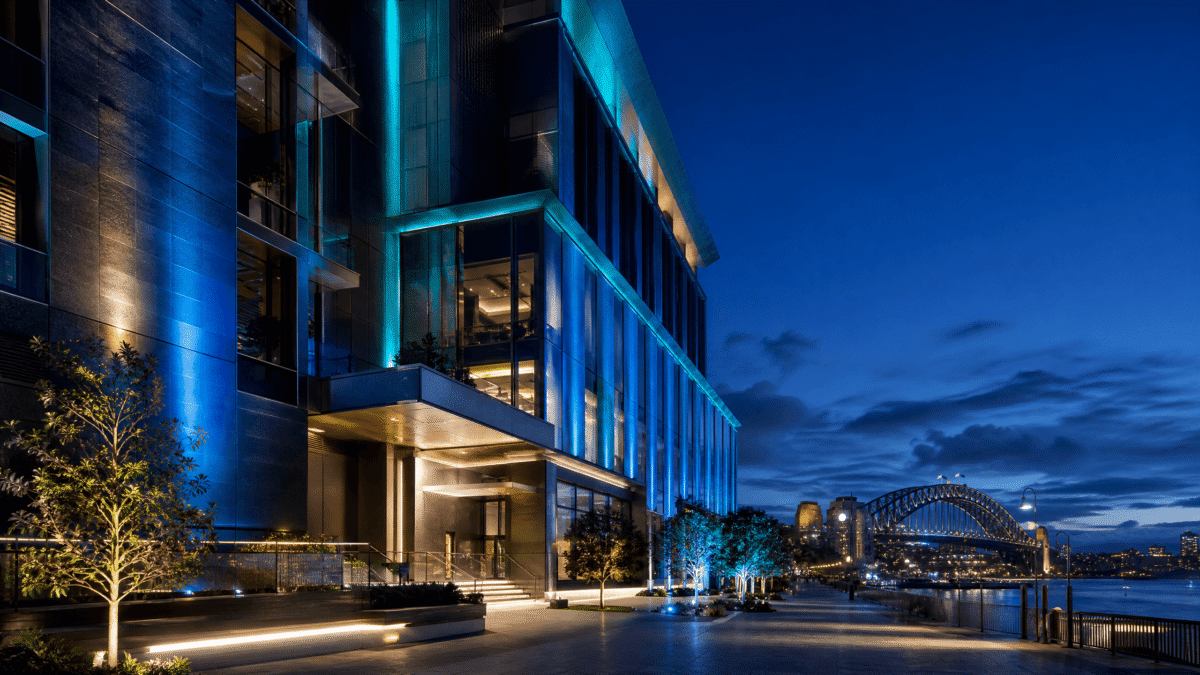
Glare, the sensation produced by luminance within the visual field that are sufficiently greater than the luminance to which the eyes are adapted, can significantly impair vision and cause discomfort. In New South Wales, managing glare from outdoor lighting is not just about visual comfort; it’s a critical aspect of public safety, environmental protection, and securing project approvals. A comprehensive glare assessment NSW is essential to ensure that lighting installations comply with stringent Australian Standards and local planning requirements, preventing issues ranging from resident complaints to traffic hazards.
This article outlines five key steps to effectively assess and mitigate glare in NSW lighting projects, helping developers, engineers, and facility managers achieve compliant, high-quality, and community-friendly lighting solutions.
Understanding Glare: Types and Impacts
Glare is broadly categorised into two main types, each with distinct impacts:
Discomfort Glare: This type of glare causes a sensation of annoyance or pain without necessarily impairing the ability to see objects. It’s often experienced from bright car headlights or unshielded streetlights. While not directly dangerous, prolonged discomfort glare can lead to fatigue and reduced visual performance.
Disability Glare: This more severe form of glare reduces the ability to see objects without necessarily causing discomfort. It occurs when stray light within the eye scatters, reducing contrast and making it harder to discern details. Disability glare is particularly hazardous for drivers, cyclists, and pedestrians, as it can temporarily blind them to obstacles or other road users.
Both types of glare can lead to significant issues, including reduced visual amenity for residents, safety concerns for road users, and negative impacts on nocturnal environments. Therefore, a thorough glare assessment is paramount in any outdoor lighting project in NSW.
The Standard: AS/NZS 4282:2023 and Glare Limits
The primary standard governing obtrusive lighting, including glare, in Australia and New Zealand is AS/NZS 4282:2023 – Control of the Obtrusive Effects of Outdoor Lighting . This standard sets clear limits on the amount of light spill, sky glow, and glare that is acceptable from outdoor lighting installations. Key aspects related to glare include:
Environmental Zones: AS/NZS 4282 defines five environmental zones (E0 to E4), ranging from intrinsically dark (E0) to high brightness (E4). Each zone has specific limits for various obtrusive lighting parameters, including glare. The classification of a site into an appropriate environmental zone is the first step in any glare assessment.
Glare Rating (GR): For sports lighting and other large area installations, the Glare Rating (GR) is a common metric used to quantify discomfort glare. It considers factors such as the luminance of the luminaires, their size, position, and the background luminance. Lower GR values indicate less glare. While AS/NZS 4282 primarily focuses on other glare metrics, GR is often referenced in sports lighting standards (AS 2560) and can be a council requirement .
Threshold Increment (TI): This metric quantifies disability glare, particularly for road users. It measures the percentage increase in luminance required for an object to be just visible against its background in the presence of a glare source. AS/NZS 1158, the standard for road and public space lighting, specifies limits for TI to ensure road safety .
Understanding these metrics and how they apply within the context of AS/NZS 4282:2023 is fundamental to conducting an accurate and compliant glare assessment. For a deeper dive into the standard, refer to our .
When is a Glare Assessment Required in NSW?
Glare assessments are frequently required in NSW for a variety of projects, particularly those involving significant outdoor lighting:
- Development Applications (DAs): Councils often mandate a glare assessment as part of the process for new commercial, industrial, or residential developments. This ensures that proposed lighting will not cause nuisance to neighbours or hazards to road users.
- Sports Lighting: Due to the high-intensity luminaires used, sports facilities (from local clubs to major stadiums) almost always require a glare assessment to comply with AS 2560 and local council requirements. Our article on provides further context on these requirements.
- Public Spaces: Lighting in parks, public plazas, and pedestrian areas must be assessed to ensure visual comfort and safety for the public, preventing discomfort glare for pedestrians and disability glare for drivers on adjacent roads.
- Residential Complaints: If a council receives complaints about glare from an existing installation (e.g., from a commercial property impacting a residential home), a glare assessment may be required to identify the source and propose mitigation measures.
Road and Transport Infrastructure: Lighting for roads, tunnels, and transport hubs requires rigorous glare assessment to maintain visibility and safety for drivers and operators.
Conducting a Glare Assessment: Key Methodologies
A robust glare assessment combines both theoretical modelling and, where applicable, on-site measurements:
- Photometric Modelling: For proposed lighting designs, advanced computer software is used to create a virtual model of the site. This allows lighting engineers to simulate light distribution, calculate predicted glare levels (GR, TI, and other AS/NZS 4282 parameters), and identify potential problem areas before installation. This predictive analysis is a core component of our .
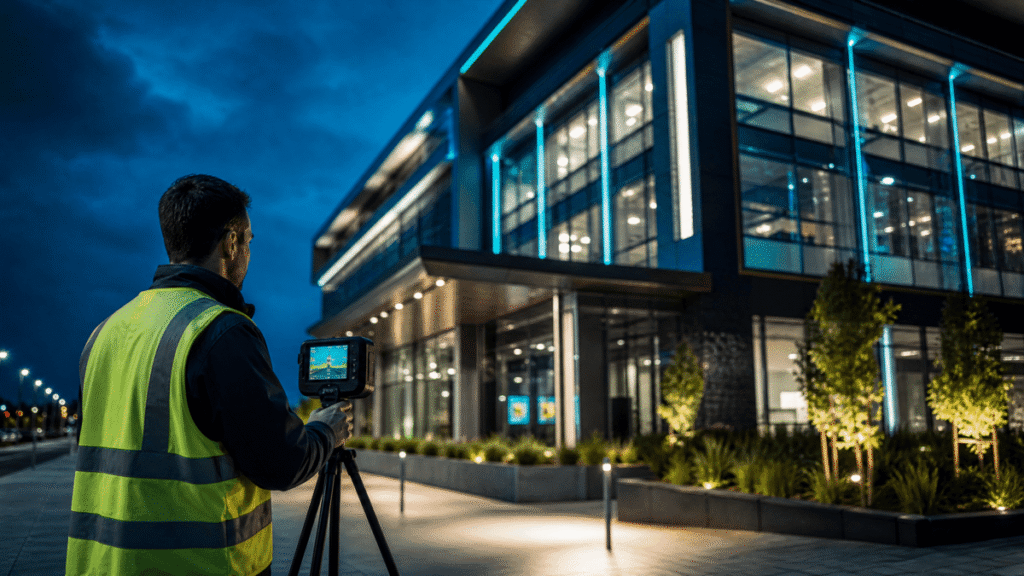
- On-site Measurements: For existing installations or post-installation verification, specialised equipment is used to measure actual glare levels. This involves taking readings at various critical observer points (e.g., residential windows, driver eye-heights on adjacent roads) to compare real-world performance against the specified limits in AS/NZS 4282:2023.
- Reporting: A comprehensive glare assessment report documents all findings, including methodologies, calculations, photometric plans, and a clear statement of compliance or non-compliance. The report also proposes mitigation strategies if glare levels exceed acceptable limits.
Mitigation Strategies for Effective Glare Control
If a glare assessment identifies non-compliant levels, various strategies can be employed to mitigate the issue:
- Luminaire Selection: Choosing luminaires with appropriate light distribution, cut-off angles, and shielding is crucial. Full cut-off luminaires, for example, direct all light downwards, significantly reducing upward light spill and glare.
- Shielding and Baffles: Adding external shields, louvres, or baffles to luminaires can effectively block light from reaching sensitive viewing angles without compromising the intended illumination area.
- Careful Aiming and Orientation: Precise aiming of luminaires ensures light is directed only where needed. Avoiding aiming luminaires directly towards residential properties or major roadways is a fundamental principle.
- Mounting Height and Spacing: Optimising mounting heights and spacing can improve uniformity and reduce the need for excessively bright individual luminaires, thereby lowering overall glare.
- Adaptive Controls: Implementing dimming controls, timers, and motion sensors allows lighting levels to be adjusted based on time of day, occupancy, or ambient conditions. This not only reduces glare during sensitive periods but also improves energy efficiency.
- Light Source Colour Temperature: While not directly a glare control, selecting warmer colour temperatures (e.g., 3000K or less) can reduce the perception of harshness and improve visual comfort, especially in residential or environmentally sensitive areas.
These strategies, often combined, form the basis of an effective that prioritises both functionality and amenity.
Why Professional Glare Assessment is Essential for Your NSW Project
Navigating the complexities of glare assessment and compliance in NSW requires specialised knowledge and experience. Engaging a qualified lighting consultant offers several critical advantages:
- Expert Interpretation of Standards: Professionals possess an in-depth understanding of AS/NZS 4282:2023, AS/NZS 1158, AS 2560, and local council DCPs, ensuring accurate application of limits and methodologies.
- Advanced Modelling and Measurement: Access to sophisticated photometric software and calibrated testing equipment guarantees precise analysis and reliable data.
- Proactive Problem Solving: Identifying potential glare issues early in the design phase allows for cost-effective mitigation before construction, preventing expensive retrofits and project delays.
- Seamless Approvals: A professionally prepared glare assessment report provides councils and planning authorities with the robust technical documentation they need to grant approvals confidently. Our are adept at preparing such reports.
- Risk Mitigation: Minimising the risk of resident complaints, legal disputes, and non-compliance penalties, protecting your project’s reputation and budget.
Partnering with Vec Group ensures your project benefits from expert glare assessment, leading to lighting solutions that are not only effective and safe but also fully compliant with NSW regulations. For a broader understanding of compliance, see our article.
Conclusion
Glare assessment is an indispensable component of responsible outdoor lighting design and development in NSW. By understanding the types of glare, adhering to the limits set by AS/NZS 4282:2023, and implementing effective mitigation strategies, projects can achieve optimal illumination without compromising safety or amenity. Proactive engagement with qualified lighting professionals ensures that your project successfully navigates the regulatory landscape, securing approvals and delivering high-quality, glare-free lighting solutions.
Don’t let glare become an obstacle to your project’s success. to discuss your glare assessment needs and ensure your lighting design is brilliant, not blinding.
Related Services from VEC Group
- Lighting engineering for projects in Sydney, NSW and across Australia
- Emergency lighting and exit signs are part of a building’s dry fire services – see our guide to dry fire services design
- Fire alarm system design coordinated with your lighting and ceiling layouts
- Contact VEC Group for a fee proposal