Table of Contents
ToggleCouncil Lighting Assessment NSW: 5 Crucial Steps for Project Approval & Compliance
In New South Wales, effective lighting is vital for public safety, amenity, and security. However, ensuring that lighting installations—whether for new developments, public spaces, or sports facilities—meet the stringent requirements of local councils can be a complex undertaking. A council lighting assessment NSW is a crucial step in this process, providing the necessary verification that your project aligns with all relevant standards and local government policies. Ignoring these assessments can lead to project delays, costly redesigns, or even non-compliance penalties.
This article outlines five crucial steps to successfully navigate council lighting assessments in NSW, helping project managers, developers, and facility owners achieve seamless approvals and maintain compliant, high-quality lighting solutions.
Step 1: Understand When a Council Lighting Assessment is Required
Knowing when a council lighting assessment is necessary is the first step towards compliance. These assessments are typically triggered by several scenarios:
- Development Applications (DAs): For any new construction or significant renovation involving external lighting, councils often mandate a lighting assessment as part of the [Development Application lighting NSW][1] process. This ensures that proposed lighting will not negatively impact surrounding areas or public safety.
- Public Spaces: Lighting in parks, plazas, pedestrian walkways, and other public domains falls under council jurisdiction. Regular assessments or those required for upgrades ensure these areas remain safe, accessible, and aesthetically pleasing while minimising environmental impact.
- Sports Fields: Upgrades or new installations for sports lighting, from local ovals to regional sports complexes, require assessments to confirm compliance with specific sports lighting standards (AS 2560 series) and to control light spill into residential zones.
- Complaints Management: If a council receives complaints from residents regarding excessive light spill, glare, or light pollution from an existing installation, a lighting assessment may be required to investigate and propose remedial actions.
- Energy Efficiency & Sustainability Initiatives: Councils increasingly require assessments to support upgrades to energy-efficient LED lighting and smart control systems, aligning with broader sustainability goals.
Step 2: Key Standards & Council Policies Governing Lighting in NSW
NSW councils operate within a comprehensive framework of standards and policies to regulate lighting. Understanding these is fundamental to any successful assessment:
- AS/NZS 4282:2023 – Control of the Obtrusive Effects of Outdoor Lighting: This is the primary standard for managing light spill, glare, and sky glow. The 2023 update places a stronger emphasis on ecological impacts and defines environmental zones (E0 to E4) with specific limits . Councils frequently reference this standard in their Development Control Plans (DCPs) and conditions of consent.
- AS/NZS 1158 Series – Lighting for Roads and Public Spaces: This series provides criteria for various public lighting applications, ensuring adequate illumination for safety and visibility in areas such as roads, footpaths, and car parks .
- AS 2560 Series – Sports Lighting: These standards specify illumination levels and uniformity requirements for different sports and competition levels, ensuring fair play and spectator visibility while managing off-site impacts.
- NSW Public Lighting Code (2006): While primarily for public lighting service providers (electricity distributors) and councils, this code outlines minimum performance standards and management responsibilities for public lighting assets [4].
- Local Council Development Control Plans (DCPs) & Local Environmental Plans (LEPs): Each council develops its own DCPs and LEPs, which often contain specific clauses regarding outdoor lighting, including acceptable lux levels, luminaire types, operating hours, and light pollution mitigation strategies. These local policies are critical and can vary significantly between LGAs.
Step 3: What a Comprehensive Council Lighting Assessment Involves
A thorough council lighting assessment typically involves a combination of technical analysis and detailed reporting:
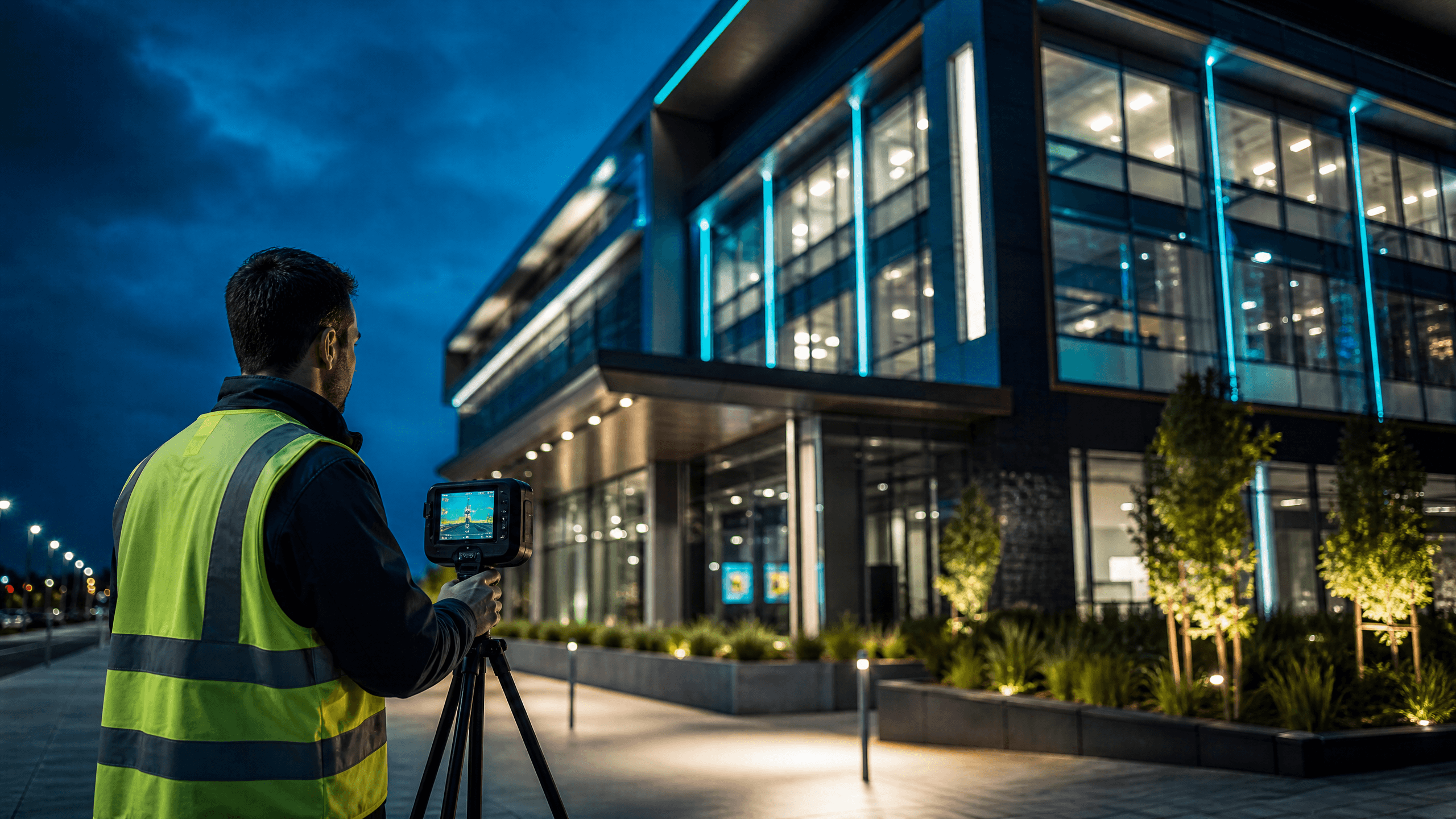
- On-site Audits and Lux Testing: For existing installations, this involves using calibrated lux meters to measure actual horizontal and vertical illumination levels, uniformity, and light spill at property boundaries. This data provides a real-world snapshot of performance.
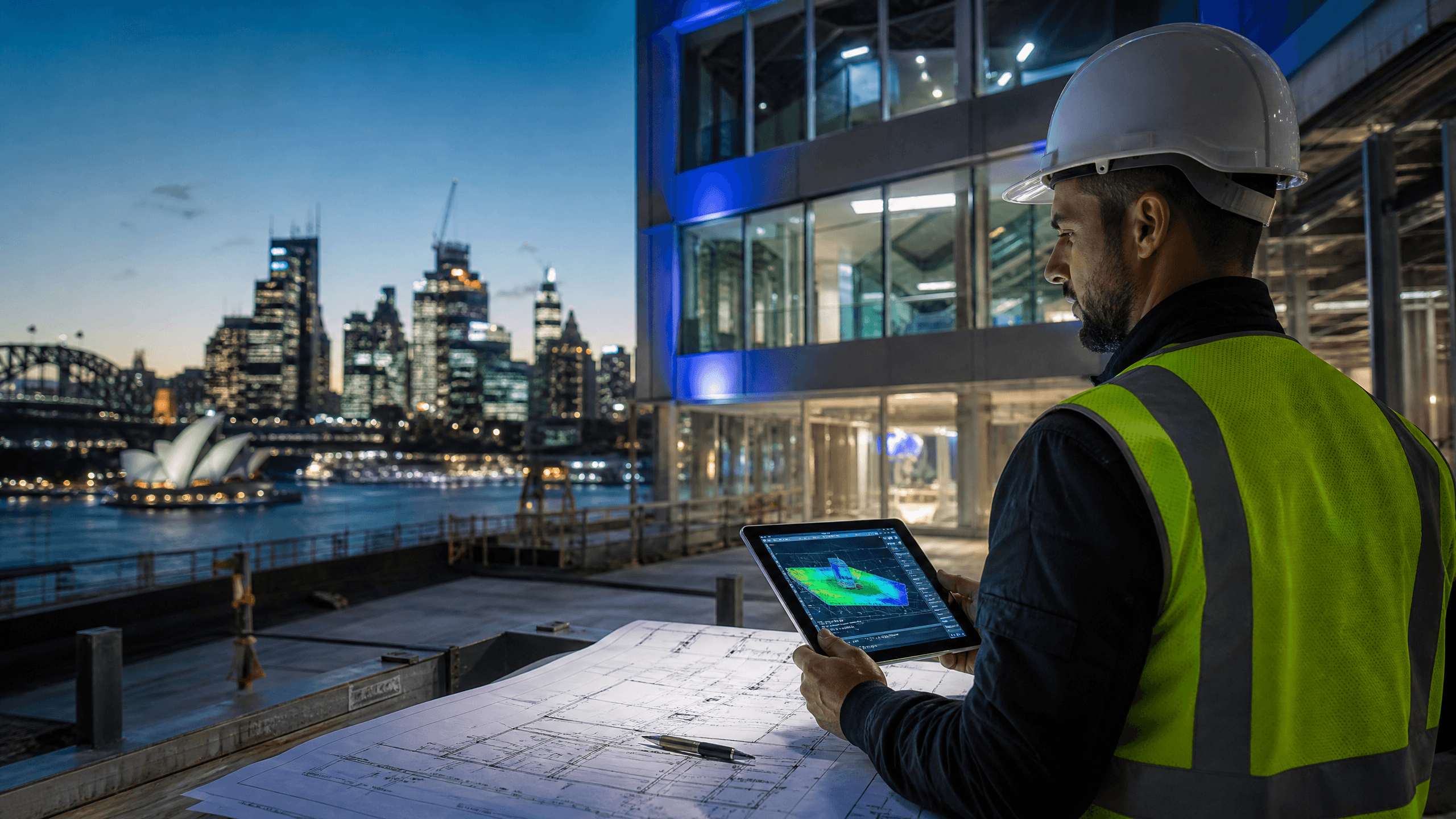
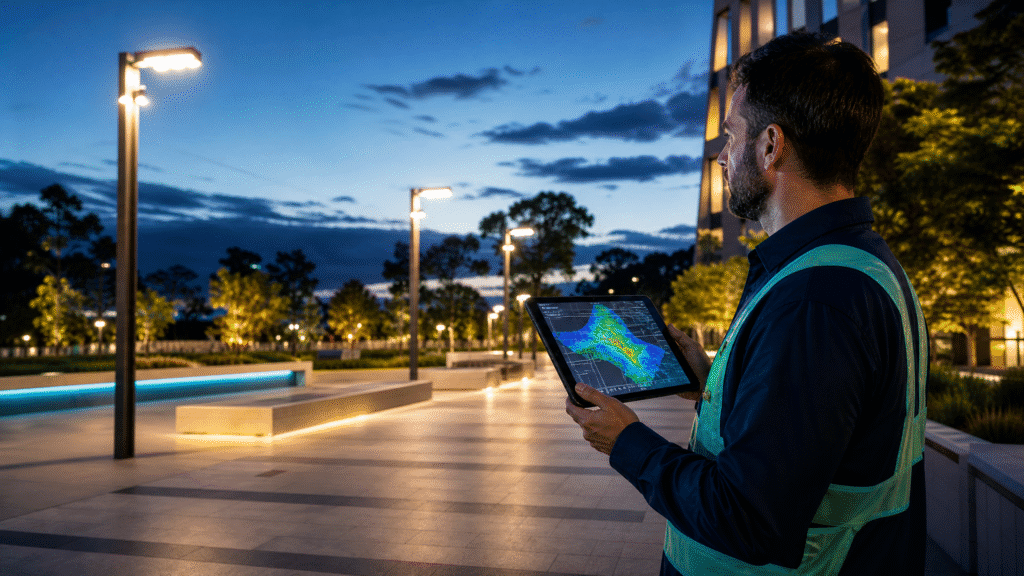
- Photometric Modelling: For proposed designs, advanced software is used to create detailed simulations. This allows engineers to predict light distribution, calculate lux levels, identify potential light spill and glare zones, and verify compliance with standards like AS/NZS 4282 before installation. Engaging a [Lighting Engineering service][5] is crucial for accurate modelling.
- Compliance Reporting: A formal report is prepared, documenting the assessment findings. This report compares the measured or modelled data against the requirements of relevant Australian Standards and council policies. It includes detailed plans, calculations, luminaire specifications, and a clear statement of compliance. Our [AS/NZS 4282 compliance guide][6] provides further details on these reports.
- Audit of Physical Assets: For existing public lighting, this may include inspecting the condition of poles, luminaires, wiring, and control systems to identify maintenance needs or opportunities for upgrades.
Step 4: Addressing Common Council Concerns
Councils are primarily concerned with ensuring that lighting solutions are safe, sustainable, and do not negatively impact the community or environment. Key areas of focus include:
- Light Spill and Glare: Unwanted light extending beyond the property boundary (light spill) or intense, uncomfortable brightness (glare) are common causes of complaints. Assessments must demonstrate how these are controlled, often through careful luminaire selection, shielding, and aiming. Our [light spill assessment NSW][7] article delves deeper into this.
- Energy Efficiency: Councils promote sustainable practices. Lighting designs must demonstrate compliance with energy efficiency requirements, such as NCC Part J7, and explore opportunities for LED upgrades and smart controls. Our [external lighting design guide][8] highlights energy-efficient design principles.
- Environmental Impact: The impact of artificial light on nocturnal wildlife and ecosystems is a growing concern. Assessments may need to consider specific measures to protect biodiversity, especially in areas adjacent to natural habitats.
- Public Safety and Amenity: Ensuring adequate illumination for pedestrian and vehicular safety, while maintaining the amenity of residential areas, is a delicate balance. The assessment must show that the design achieves both.
Step 5: Securing Approval & Ensuring Ongoing Compliance
The final steps involve presenting your assessment for approval and establishing a plan for long-term compliance:
- Clear Documentation: The lighting assessment report must be clear, concise, and provide all the necessary technical data and compliance statements that council officers require. This minimises back-and-forth queries and speeds up the approval process.
- Verification and Commissioning: After installation, it is often necessary to conduct post-installation lux testing to verify that the actual performance of the lighting system matches the approved design and photometric modelling. This step is crucial for obtaining Occupation Certificates.
- Maintenance and Monitoring: Ongoing compliance requires a robust maintenance plan. Regular inspections, cleaning, and prompt repair of faulty luminaires ensure the system continues to operate as intended. For public lighting, councils often have specific management plans in place.
By proactively addressing these steps, you can significantly enhance your project’s chances of gaining council approval and ensure your lighting solution remains compliant and effective for its lifespan.
Why Partner with Vec Group for Your Council Lighting Assessment
Navigating the specific requirements of each NSW council, coupled with the complexities of Australian Standards, demands specialised expertise. Vec Group offers comprehensive [professional lighting design consultants][9] services, providing:
- Expert Knowledge: Up-to-date understanding of all relevant NSW council policies, DCPs, and Australian Standards.
- Advanced Tools: Utilisation of state-of-the-art photometric modelling software and calibrated testing equipment.
- Proven Track Record: Experience in preparing robust, council-ready lighting assessment reports that facilitate smooth approvals.
- Integrated Solutions: Ability to integrate lighting assessments with broader lighting compliance NSW and [external lighting design][8] strategies.
Partnering with Vec Group ensures your project meets all council lighting assessment requirements, mitigating risks and contributing to successful project outcomes across NSW.
Conclusion
Successful lighting projects in NSW require more than just good design; they demand meticulous attention to council requirements and a thorough understanding of compliance. By following these five crucial steps for a council lighting assessment NSW, you can ensure your lighting installations are safe, efficient, and environmentally responsible, leading to faster approvals and long-term operational success.
Don’t let lighting compliance become a hurdle for your project. Contact Vec Group today to discuss your specific council lighting assessment needs and ensure your project shines brightly, compliantly.