Table of Contents
ToggleLight Spill Assessment NSW: When You Need a Report, What It Covers, and How to Prepare
What Is a Light Spill Assessment?
A light spill assessment is an independent technical evaluation of how outdoor lighting affects surrounding properties, public areas, and the environment. Also known as a lighting impact assessment or obtrusive light assessment, it measures and predicts whether artificial light from a proposed or existing installation extends beyond its intended target area in ways that could create nuisance, reduce safety, or harm amenity and wildlife.
Light spill, obtrusive light, and light pollution are related but distinct concepts. Light spill refers to the physical spreading of light beyond the area where it is needed—for example, light from a car park fixture reaching a neighbouring bedroom window or a sports field light illuminating nearby bushland. Obtrusive light is the broader term used in Australian Standards to describe unwanted effects of outdoor lighting, including light trespass (spill), glare, and sky glow. Light pollution is the environmental consequence of excessive or poorly designed artificial lighting, with effects ranging from neighbourhood disputes to ecosystem disruption.
An independent assessment matters because it provides objective, standards-based evidence that a design meets regulatory requirements, protects amenity, and minimises unintended impacts. Early assessment also identifies design changes before construction, avoiding costly redesigns, council rejections, or neighbour complaints.
When Do NSW Projects Need a Light Spill Assessment?
NSW councils and planning authorities increasingly require light spill assessments as a condition of development approval, particularly for projects with significant external lighting. The trigger typically depends on the project type, location, scale, and proximity to sensitive receivers.
Development applications that commonly require assessment include commercial developments with car parks, retail precincts, or façade lighting; industrial warehouses or manufacturing facilities with security or operational lighting; sports facilities and public recreation areas; mixed-use developments with rooftop or courtyard lighting; and residential subdivisions or multi-unit developments with common area or security lighting. Infrastructure projects such as EV charging stations, telecommunications facilities, and public amenities may also trigger assessment requirements.
Sensitive receivers—locations where light spill would be particularly problematic—include residential properties, especially windows facing the development; schools, childcare centres, and educational facilities; hospitals and aged care homes; bushland, nature reserves, and areas with protected wildlife; and observatories or areas with dark-sky designations. Projects within or near these contexts are more likely to face council conditions requiring formal assessment.
Council requirements vary across NSW. Some councils include light spill conditions in most development consents for commercial or industrial projects. Others require assessment only when a development is near residential areas or environmentally sensitive land. The NSW Dark Sky Planning Guideline applies specifically to developments within and around Coonamble, Dubbo Regional, Gilgandra, and Warrumbungle local government areas, where protection of Siding Spring Observatory creates stricter lighting limits. Even outside these areas, councils may reference Australian Standards or local planning policies that implicitly require compliance assessment.
Existing site issues can also trigger assessment. If a property receives complaints about light spill from neighbouring properties, or if an existing facility needs to verify compliance with consent conditions or address environmental concerns, an independent assessment provides evidence and guides remedial action.
What Information Is Required to Prepare an Assessment?
A thorough light spill assessment requires comprehensive project documentation and clear definition of the assessment scope. The consultant will need site and architectural plans showing property boundaries, building footprints, proposed lighting locations, mounting heights, and the layout of nearby sensitive receivers such as residential windows, roads, or bushland. Luminaire specifications are critical: the consultant must obtain the photometric data (IES files or equivalent) for each light fixture, including its light output, beam pattern, colour temperature, and control options. Without accurate fixture data, the model cannot reliably predict light distribution.
Aiming and control information describes how each light will be oriented, whether it includes shielding or louvres, and what controls (timers, sensors, dimmers, or curfew systems) will manage its operation. Mounting details specify the height, angle, and distance of each fixture from sensitive receivers. Applicable consent conditions or council requirements should be provided, as these define the specific criteria the assessment must address. For example, a consent condition might specify maximum illuminance levels at a neighbouring property boundary, or reference AS/NZS 4282:2023 compliance.
Environmental context includes information about nearby wildlife habitats, threatened species, or dark-sky designations. For projects in sensitive areas, this information helps the consultant assess impacts on biodiversity and recommend appropriate mitigation, such as amber-coloured lighting or reduced intensity during certain hours.
What Does a Light Spill Assessment Report Include?
A professional light spill assessment report typically contains several key sections. The project and planning context describes the development, its location, relevant consent conditions, and the purpose of the assessment. The assessment methodology explains the approach: whether it relies on computer modelling, on-site measurements, or both. It also states assumptions—for example, that luminaires will be installed exactly as specified, or that operating hours will be controlled as proposed.
The applicable standards and criteria section identifies which Australian Standards apply (typically AS/NZS 4282:2023 for obtrusive lighting, AS/NZS 1158 for roads and public spaces, or AS/NZS 2560 for sports lighting) and any council-specific requirements or Local Environmental Plan provisions. The photometric modelling section presents the predicted light distribution, often shown as contour maps or tables of illuminance at key receiver locations. Calculation results compare predicted performance against the applicable criteria, clearly stating whether the design complies or identifies non-compliant areas.
Recommendations describe design changes or mitigation measures—such as reduced fixture output, improved shielding, adjusted aiming, or operational controls—needed to achieve compliance. Limitations and assumptions are explicitly stated, such as the accuracy of the model depending on correct installation and maintenance of fixtures, or the model’s inability to account for dust, vegetation changes, or future development nearby.
Many reports also include on-site measurements (lux and luminance testing) if the assessment is conducted post-installation or if the design is complex. Post-installation verification may be recommended to confirm that the installed system matches the modelled design.
How Is Light Spill Modelled and Measured?
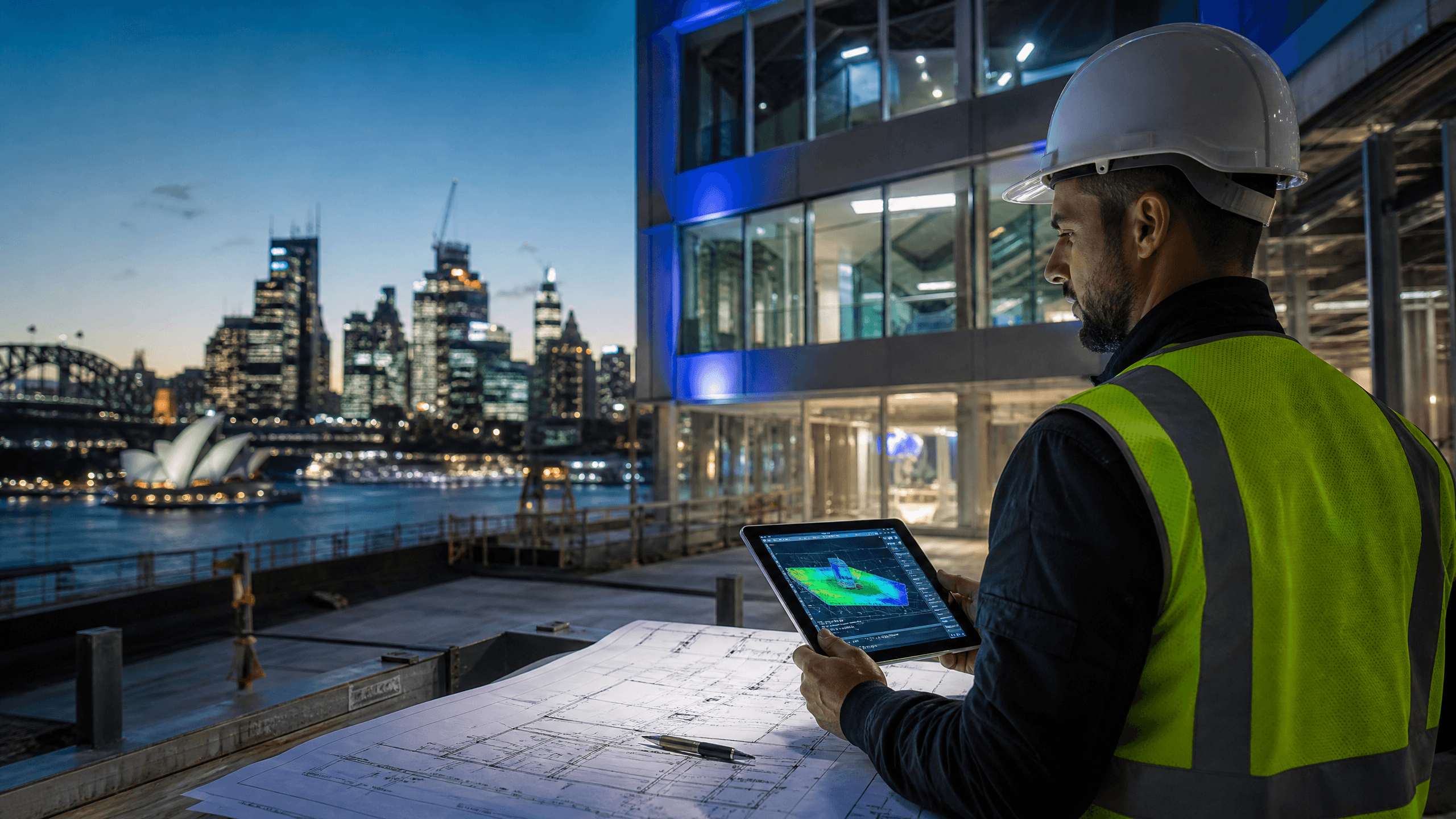
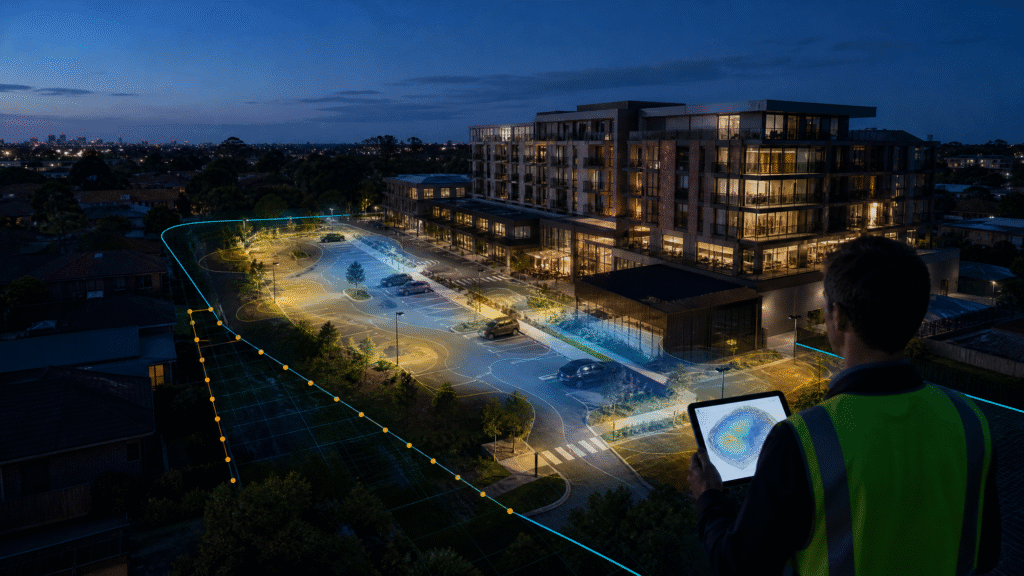
Light spill assessment combines computer modelling with, where appropriate, on-site measurement. Photometric modelling software (such as AGi32, Dialux, or similar) uses the IES photometric data for each luminaire to predict light distribution across a three-dimensional model of the site. The software calculates illuminance (measured in lux) at specified receiver locations—typically on the ground at property boundaries, on vertical planes at neighbouring windows, or across a grid representing the surrounding area.
Calculation planes are positioned to represent sensitive receivers. For example, a vertical plane at a neighbouring property boundary might be set at eye level (typically 1.5 metres) to assess glare and light trespass into windows. A horizontal plane on the ground might represent a pathway or garden area. The software computes illuminance values at these planes, allowing the consultant to verify compliance with standard limits and identify areas of excessive spill.
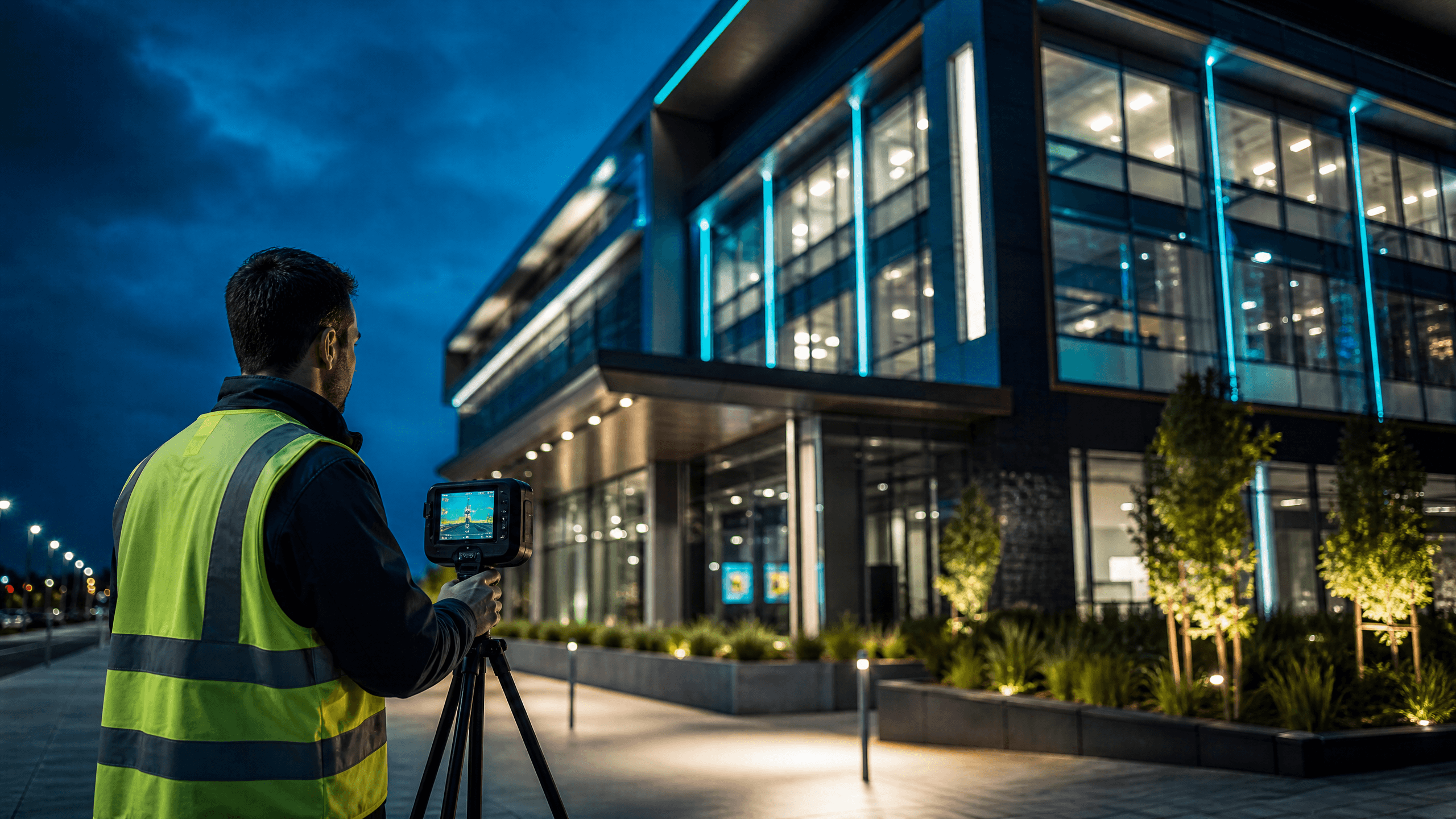
On-site lux testing involves portable light meters that measure actual illuminance at specific points. This is commonly performed post-installation to verify that the installed system matches the model, or to diagnose existing problems. Luminance testing measures the brightness of a light source or illuminated surface as perceived from a specific viewing angle, which is relevant for assessing glare and visual comfort.
Vertical illuminance is a key parameter in AS/NZS 4282:2023, measuring light on a vertical plane (such as a building façade or property boundary) rather than on the ground. This parameter is particularly important for assessing light trespass into windows and the impact on neighbouring properties.
Environmental zones defined in the standard classify areas based on their ambient environment (urban, suburban, rural, or protected) and assign different acceptable limits for light spill, glare, and sky glow. A sports facility in a suburban area, for example, would have different allowable limits than one in a rural area near bushland.
Common Reasons Projects Fail Light Spill Assessment
Understanding common failure points helps developers and designers avoid costly redesigns. Late engagement with a lighting consultant is perhaps the most frequent issue. If assessment occurs after the design is finalised and construction is imminent, there is little opportunity to modify fixtures, aiming, or mounting heights without significant cost and delay. Early engagement—ideally during concept or schematic design—allows the consultant to influence decisions while changes are still feasible.
Incomplete or incorrect luminaire data undermines the entire model. If a contractor substitutes a fixture with different photometric properties, or if the specified fixture’s data is unavailable or inaccurate, the model’s predictions become unreliable. This is why detailed specification and verification of luminaire selection is critical.
Uncontrolled floodlight aiming is a common on-site problem. Floodlights that are not precisely aimed, or that are adjusted after installation without reference to the design, can dramatically increase spill. Similarly, excessive mounting height or excessive output (more lumens than necessary) increases the area affected by light spill. Designers sometimes over-specify lighting “to be safe,” not realising that more light increases both energy consumption and environmental impact.
Missing shielding or directional control means light spreads upward and sideways rather than being directed downward to the target area. A fixture without a shield or louvre will spill light in all directions, whereas a properly shielded fixture concentrates light where it is needed.
Ignoring operating hours and curfew requirements is another common oversight. A consent condition might require that car park lighting be switched off after 11 p.m., or that sports field lighting operate only on scheduled match days. If the installed system does not enforce these controls, the project fails to meet its consent conditions, regardless of the design’s technical compliance during operating hours.
Not considering environmental context—such as nearby bushland, wildlife corridors, or dark-sky areas—can result in designs that comply with general standards but still harm local ecosystems or conflict with environmental objectives. The National Light Pollution Guidelines for Wildlife recommend considering the impact of lighting on nocturnal species, particularly in areas with threatened species or sensitive habitats .
How to Prepare Your Project for a Light Spill Assessment
Early engagement is the single most important step. Involve a lighting consultant during the concept or schematic design phase, before the architectural and engineering design is locked in. This allows the consultant to advise on luminaire selection, mounting strategy, and controls from the outset.
Gather complete project documentation, including architectural plans, site boundaries, details of nearby sensitive receivers (residential windows, roads, bushland), and any relevant consent conditions or council requirements. The more information provided, the more accurate and useful the assessment will be.
Select appropriate luminaires based on the task, the site context, and the need to minimise spill. Modern LED fixtures offer excellent control and efficiency, but selection should be based on photometric performance, not just cost or aesthetic preference. Ensure that IES photometric files are available for any proposed fixture.
Coordinate with architects and engineers to ensure that lighting design is integrated with other building systems. Poor coordination between lighting, mechanical services, and structural elements can result in cluttered ceiling plans, compromised fixture positioning, or conflicts that force compromises on light spill control.
Plan for post-installation verification if the project is complex, high-risk, or subject to strict consent conditions. Post-installation testing confirms that the installed system matches the design and provides evidence of compliance for the certifier or council.
Understand council and consent requirements specific to your project and location. Some councils have published guidelines or policies on light spill; others rely on the applicant to propose a design that meets the relevant standards. Clarifying these expectations early prevents misunderstandings later.
Light Spill Assessment and NSW Compliance
AS/NZS 4282:2023, Control of the Obtrusive Effects of Outdoor Lighting, is the primary Australian Standard for assessing and controlling light spill . Published in November 2023, it sets limits for light trespass, glare, and sky glow based on environmental zone and receiver type. However, Australian Standards are not automatically legally enforceable; they become enforceable when incorporated into a development consent condition, a Local Environmental Plan, or a State Environmental Planning Policy.
Development consent conditions often explicitly reference the standard or impose specific illuminance limits at property boundaries or sensitive receiver locations. Compliance with these conditions is a requirement for the Occupation Certificate and ongoing operation of the facility.
Local Environmental Plans in some NSW councils include provisions addressing light pollution. For example, the Ryde Local Environmental Plan 2014 includes a requirement for developments over a certain size to consider light pollution as part of environmental sustainability assessment. The Siding Spring Observatory protection clause (Clause 5.14 of the Standard Instrument—Principal Local Environmental Plan 2006) imposes mandatory light pollution considerations and specific limits for developments within and beyond 18 kilometres of the observatory [1].
Special considerations apply in certain contexts. The NSW Dark Sky Planning Guideline provides specific requirements for developments near Siding Spring Observatory, including maximum lumen limits, colour temperature restrictions, and mandatory consultation with the observatory director for large lighting projects . Biodiversity and environmental impact may require consideration of the National Light Pollution Guidelines for Wildlife, particularly if the project is near threatened species habitat or migratory corridors.
Frequently Asked Questions
How much does a light spill assessment cost? The cost depends on project complexity, the number of luminaires, whether on-site measurement is required, and the consultant’s location and experience. A straightforward commercial development assessment might range from $2,000 to $5,000, while a complex sports facility or large mixed-use development could cost $8,000 to $15,000 or more. Early engagement often reduces cost by allowing design optimisation before detailed modelling is required.
How long does an assessment take? A typical assessment takes 2–4 weeks from receipt of complete project documentation to delivery of the report. This includes model development, calculations, recommendations, and report writing. Urgent assessments may be expedited for an additional fee, but quality should not be compromised.
Can we use our existing lighting design? Yes, but if the design is already finalised, there may be limited opportunity to make changes if the assessment identifies non-compliance. The consultant can assess the existing design and recommend modifications, but implementing those changes post-approval may require a development modification or a variation to the consent.
What if our assessment shows non-compliance? The consultant will recommend design changes—such as reduced fixture output, improved shielding, adjusted aiming, or operational controls—to achieve compliance. These changes are typically incorporated into the design before construction, or implemented on-site if the issue is discovered during or after installation.
Do we need post-installation verification? Post-installation verification is recommended for complex projects, high-risk sites, or projects with strict consent conditions. It provides objective evidence that the installed system matches the design and meets compliance requirements, and it can identify any installation errors or maintenance issues that need correction.
Who is qualified to prepare an assessment? A qualified lighting consultant should have expertise in photometric modelling, Australian Standards, and NSW planning requirements. Many consultants are accredited by professional bodies such as the Illuminating Engineering Society of Australia and New Zealand (IESANZ) or hold relevant engineering qualifications. Vanguard Engineering Consultants includes NSW Registered Professional Engineers and Registered Design Practitioners with extensive experience in lighting design and compliance assessment.
Why Choose Vanguard Engineering Consultants for Your Light Spill Assessment
Vanguard Engineering Consultants is an independent electrical engineering and fire systems consultancy based in Hurstville, NSW, with extensive experience in lighting design and compliance. Our team includes NSW Registered Professional Engineers, Registered Design Practitioners for Electrical Engineering, and Chartered Professional Engineers (CPEng) with deep knowledge of NSW planning requirements, Australian Standards, and practical construction challenges.
We approach light spill assessment as part of integrated lighting design, not merely as a compliance checkbox. Early engagement with our team allows us to influence design decisions, optimise fixture selection and aiming, and build compliance into the project from the start. This approach reduces redesign risk, accelerates council approvals, and delivers better outcomes for your project and its neighbours.
We understand the Sydney construction market and the specific requirements of NSW councils. Whether your project is a commercial development, sports facility, industrial site, or residential complex, we provide clear, standards-based assessments and practical recommendations that support successful project delivery.